




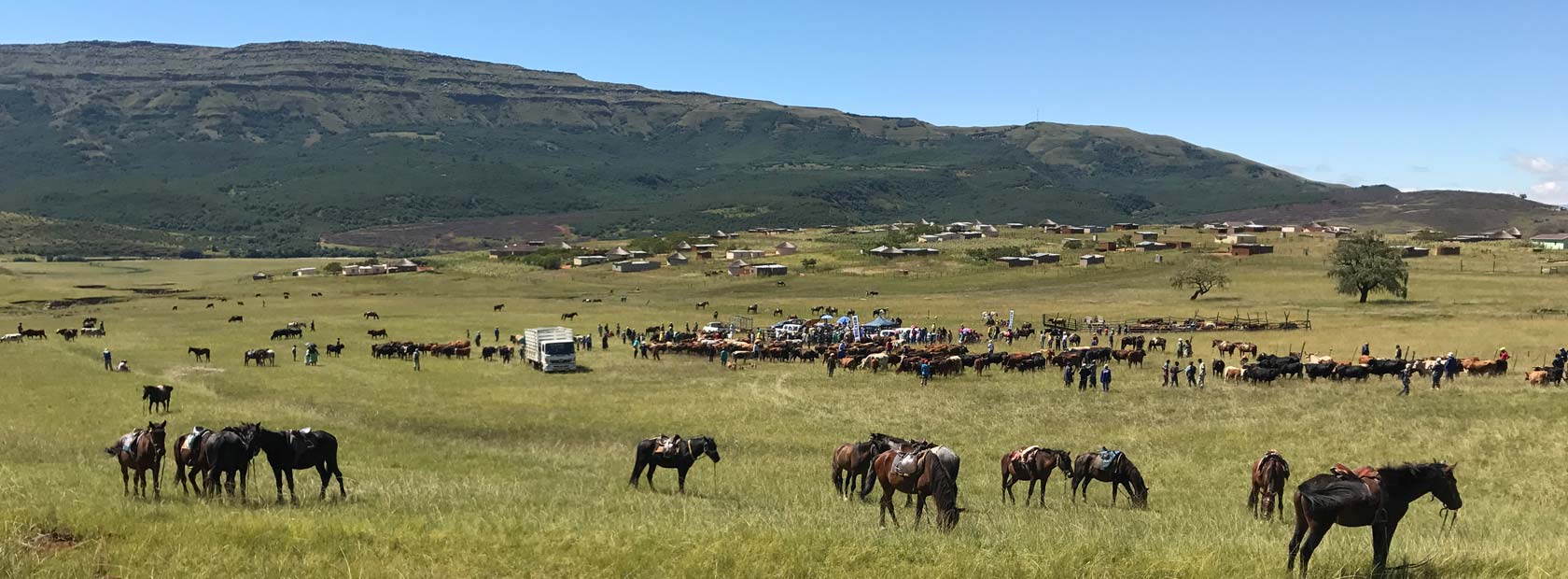
How do Vulnerability, Livelihoods and Institutions interact in the Context of COVID-19?
This is what a team of investigators are seeking to understand.
In collaboration with the SARChI Chair in Sustainable Local (Rural) Livelihoods and other partners, the team was awarded the prestigious COVID-19 Africa Rapid Grant Fund to implement its project: Understanding the Interplay Among Vulnerabilities, Livelihoods, and Institutional Dynamics in the Context of COVID-19: A Case Study of Selected Rural Communities in South Africa.
Established in May 2020, the fund aims to support the production of knowledge on the emerging questions associated with the COVID-19 pandemic, and to support relevant science engagement activities. The grant initiated with the help of the Science Granting Councils Initiative in Sub-Saharan Africa (SGCI) and administered through the National Research Foundation (NRF). It is supported by several organization and institutions around the world.
Prof Betty Mubangizi leads the funded project with an international and interdisciplinary team of co-principal investigators and local partners. Dr Andrew Emanuel Okem from the School of Life Sciences, UKZN, is the project manager. The Other team members include Dr Londeka Ngubane, School of Applied Human Sciences, UKZN; Dr Ibrahima Barry, National Agro-Food School of Nantes, France; Mr Niyi Adekanla, AIDLINE Research Ventures, Nigeria; and Dr Sokfa John, SARChI Chair in Sustainable Local Livelihoods, UKZN.
Local partners include the Matatiele and Mbizana municipalities, and the Environmental and Rural Solutions (ERS), which has been a consistent collaborator and supporter of the Chair.
The project is expected to further attract other local stakeholders and to promote the co-creation of knowledge and local capacity building, in keeping with Goal 3 of UKZN’s Strategic Plan: ‘to promote high-impact societal and stakeholder community engagement’. \
It is also in line with the objectives of the SARChI Chair in Sustainable Local Livelihoods, especially with reference to developing a framework for assessing and understanding rural livelihoods; facilitating cross-country knowledge infrastructure and sharing; strengthening research relationships among institutions; bridging the gap between theory and practice through public engagement; and promoting gender equity – all around the question of rural livelihoods.
In the initial phase of the project, a scoping review of literature on vulnerability of rural livelihoods to the COVID-19 pandemic has been completed. The research tools have been developed and other logistical arrangements are nearing conclusion to allow the investigators begin fieldwork in June 2021.